
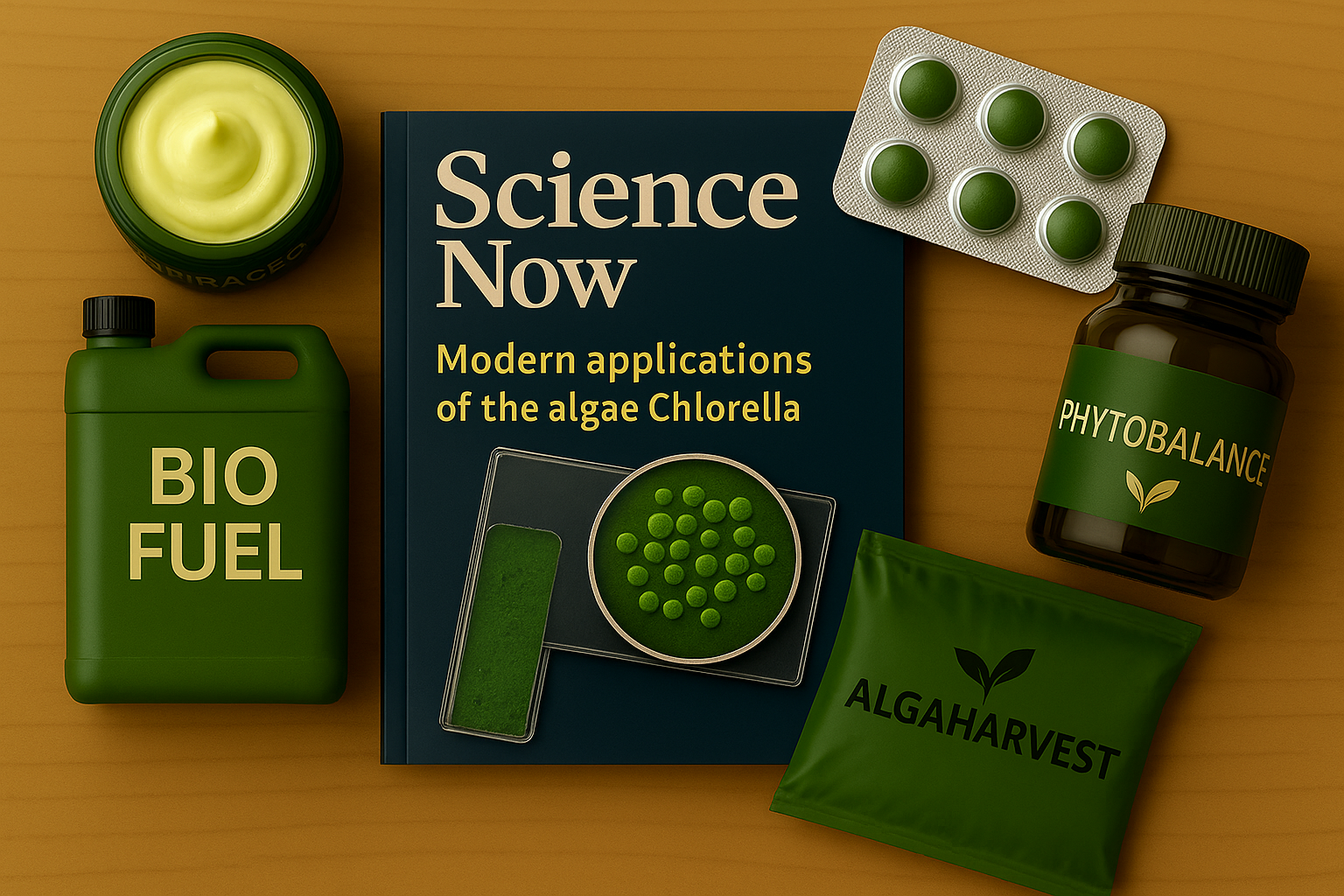
Chlorella, a single-celled green microalga, has captured significant attention for its nutritional density, sustainability, and versatility. In this article we explore the diverse industrial applications of Chlorella, examining its uses in food and dietary supplements, pharmaceuticals, cosmetics, biofuels, and agriculture. Additionally, we delve into the quality, regulatory, and market dynamics that shape the industry.
1. Food and Dietary Supplements
Chlorella’s rich nutrient profile makes it a star in the health food and dietary supplement sectors. It contains up to 60% protein by weight, essential amino acids, vitamins (such as B12), and minerals like iron and magnesium.
- Nutritional Benefits: Chlorella is a complete protein source, making it especially attractive for vegetarians and vegans. Studies have shown its potential to support immune function, detoxify heavy metals, and improve gut health (Merchant et al., 2021).
- Products: It is commonly sold as powders, tablets, and capsules. Innovations such as Chlorella-infused protein bars and beverages are gaining popularity.
- Market Insights: The global Chlorella market for dietary supplements is projected to grow significantly, driven by increasing health consciousness and plant-based diet trends. In 2023, the market for health food applications accounted for nearly 45% of Chlorella’s total demand (Future Market Insights, 2023).
2. Pharmaceutical Applications
The pharmaceutical industry taps into Chlorella’s bioactive compounds for their therapeutic potential.
- Health Benefits: Research highlights Chlorella’s antioxidant properties due to its chlorophyll and carotenoids. It’s shown promise in reducing oxidative stress and inflammation—key factors in chronic diseases such as diabetes and cardiovascular conditions (Lin et al., 2020).
- Therapeutic Use: Studies suggest that Chlorella supplementation can lower cholesterol and blood pressure levels, aiding cardiovascular health. Preliminary findings also indicate its potential role in enhancing liver detoxification processes.
- Pharmaceutical Products: Extracts of Chlorella are used in nutraceuticals and functional foods, with ongoing research into encapsulated delivery for targeted benefits.
3. Cosmetics and Personal Care
The cosmetic industry has embraced Chlorella as a natural ingredient for skin and hair care products.
- Skin Benefits: Chlorella extract is rich in vitamins A and C, which boost collagen production and improve skin elasticity. Its high chlorophyll content detoxifies and rejuvenates the skin.
- Product Applications: Chlorella is found in anti-aging creams, serums, and face masks. For example, luxury brands use it to enhance skin luminosity, while eco-conscious brands highlight its sustainable sourcing.
- Market Trends: The global natural cosmetics market, projected to reach $54 billion by 2027, increasingly incorporates algae-based ingredients, including Chlorella (Grand View Research, 2023).
4. Biofuel Production
Chlorella’s high lipid content and rapid growth rate make it an exciting candidate for renewable energy sources.
- Biofuel Potential: Lipids extracted from Chlorella can be converted into biodiesel, while residual biomass serves as feedstock for biohydrogen or biogas production.
- Research Advances: Innovations in genetic engineering and cultivation techniques aim to enhance lipid yield and reduce production costs, addressing scalability challenges (Mata et al., 2022).
- Sustainability: Unlike terrestrial crops, Chlorella cultivation doesn’t compete for arable land or freshwater resources, making it an eco-friendly alternative.
5. Agriculture and Animal Feed
Chlorella supports sustainable agricultural practices and animal husbandry.
- As a Biofertilizer: Rich in nitrogen and phosphorus, Chlorella improves soil fertility and promotes healthy plant growth. Studies have shown that its application increases crop yields by up to 20% (Singh et al., 2021).
- Animal Feed: In aquaculture, Chlorella enhances fish health and growth rates. It is also used in poultry feed to boost egg quality and immunity in livestock.
- Market Dynamics: The global demand for algae-based animal feed is projected to grow, especially in regions like Asia-Pacific, where aquaculture industries are expanding rapidly.
Quality, Regulatory, and Market Considerations
Consistency in nutritional content and purity is paramount. Producers must ensure the absence of heavy metals, toxins, and microbial contamination. Processing technologies, such as spray drying and cold milling, are critical for preserving Chlorella’s bioactivity. In Europe, Chlorella is classified as a novel food, requiring EFSA approval for safety and efficacy claims. Organic certification demands adherence to stringent cultivation and processing guidelines (CBI, 2023). The global Chlorella market was valued at $206.9 million in 2023 and is forecasted to reach $444.6 million by 2033, growing at a CAGR of 7.9% (Meticulous Research, 2023). Asia-Pacific remains the largest market, driven by dietary supplement consumption and aquaculture expansion.
Conclusion
Chlorella’s diverse applications demonstrate its pivotal role in promoting sustainability and human health. As industries continue to innovate and expand its use, maintaining rigorous quality and regulatory standards will be crucial to unlocking its full potential. The future of Chlorella’s industrial applications looks promising, poised to contribute significantly to global economic and environmental goals.
References
- Future Market Insights. (2023). Chlorella Market Size, Share, Trends, and Forecast 2033. Retrieved from https://www.futuremarketinsights.com/reports/chlorella-market
- Grand View Research. (2023). Natural Cosmetics Market Analysis. Retrieved from https://www.grandviewresearch.com/industry-analysis/natural-cosmetics-market
- Lin, C. H., & Lee, T. Y. (2020). Chlorella and Its Potential in Therapeutics. Biomedicine & Pharmacotherapy, 128, 110075. https://doi.org/10.1016/j.biopha.2020.110075
- Mata, T. M., Martins, A. A., & Caetano, N. S. (2022). Advances in Algal Biofuel Production. Renewable and Sustainable Energy Reviews, 168, 112456. https://doi.org/10.1016/j.rser.2022.112456
- Meticulous Research. (2023). Chlorella Market by Size and Trends. Retrieved from https://www.meticulousresearch.com/product/chlorella-market-5162
- Singh, R., & Pandey, S. K. (2021). The Role of Chlorella in Sustainable Agriculture. Agricultural Water Management, 256, 107943. https://doi.org/10.1016/j.agwat.2021.107943