
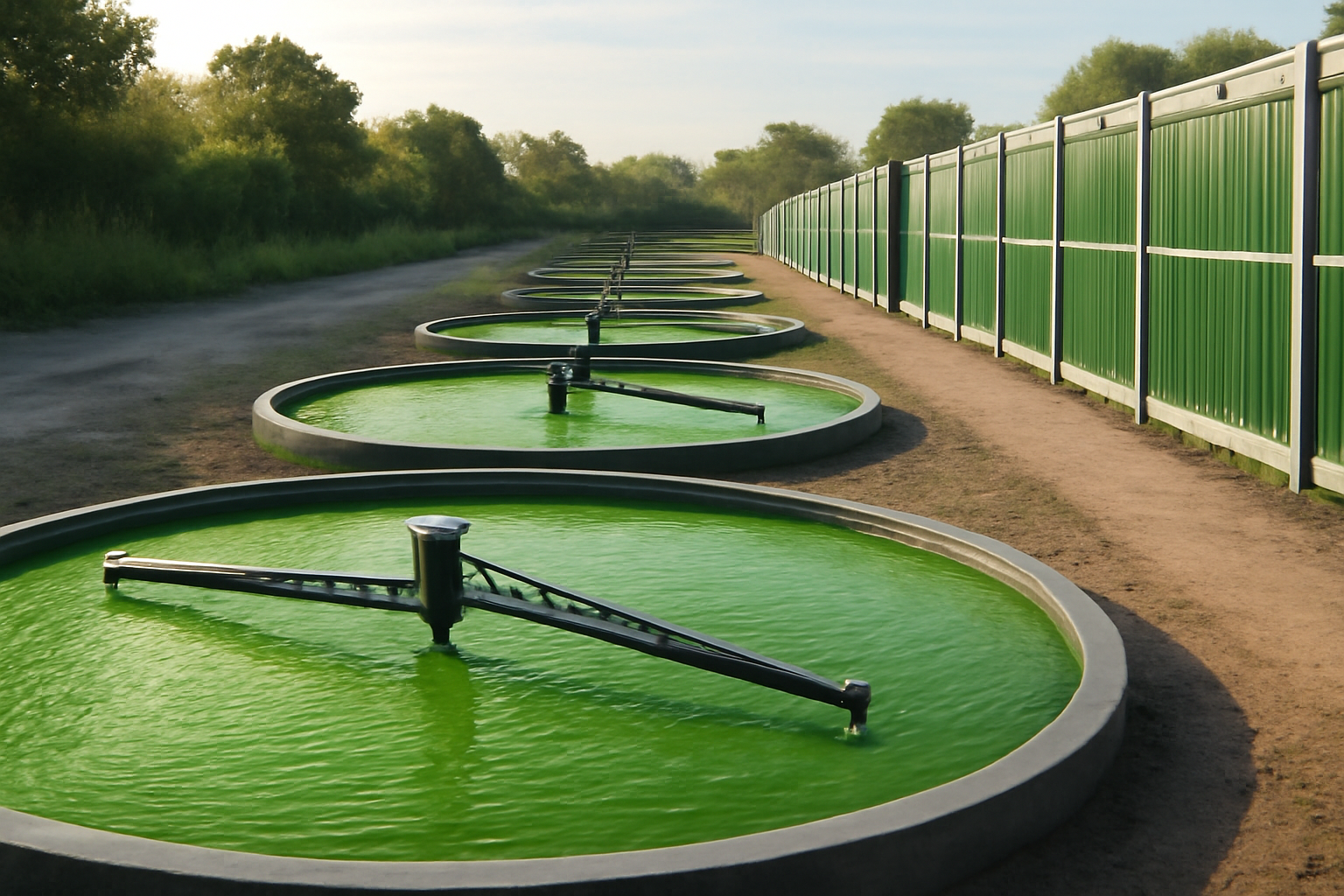
Chlorella, a unicellular green microalga, is renowned for its high protein content, essential nutrients, and potential applications in various industries, including food, pharmaceuticals, and biofuels. Cultivating Chlorella efficiently requires meticulous attention to environmental conditions, nutrient supply, and contamination control. Farmers in countries like India have adopted sustainable practices to optimize Chlorella cultivation, contributing to the industry’s growth.
1. Selection of Cultivation System
Chlorella can be cultivated using various systems, each with distinct advantages and challenges:
- Open Pond Systems: These are shallow ponds where Chlorella is exposed to natural sunlight. While cost-effective, they are susceptible to contamination and environmental fluctuations.
- Photobioreactors (PBRs): Closed systems that provide controlled environments, reducing contamination risks and allowing precise regulation of growth parameters. However, they require higher initial investments. In India, innovations in low-cost PBR designs have made this method more accessible to local farmers.
2. Ideal Environmental Conditions
- Light: Chlorella requires adequate light for photosynthesis. In India, abundant sunlight provides a natural advantage. However, excessive light can cause photoinhibition. Farmers use shading nets to modulate light intensity during peak hours.
- Temperature: Optimal growth occurs between 25-30°C. Temperatures above 35°C can inhibit growth. In regions with high temperatures, farmers implement cooling systems or schedule cultivation during cooler months.
- pH Levels: Chlorella thrives in pH levels between 6 and 9, with optimal growth around pH 8. Regular monitoring and adjustments using buffering agents help maintain stability.
3. Nutrient Requirements
- Carbon Source: CO₂ is essential for photosynthesis. Some Indian farmers utilize CO₂ from industrial emissions, integrating waste management with cultivation.
- Nitrogen and Phosphorus: These macronutrients are vital for cellular growth. Utilizing wastewater rich in these nutrients can reduce costs and promote sustainability. Studies have shown that Chlorella can effectively grow in wastewater, absorbing elements such as nitrogen and phosphorus, thus contributing to wastewater treatment [1].
- Trace Elements: Iron, magnesium, and other micronutrients are necessary. Farmers often supplement cultivation media with agricultural fertilizers to meet these requirements.
4. Contamination Prevention
- Sterilization: Ensuring all equipment and water sources are sterilized prevents the introduction of unwanted microorganisms. In India, affordable sterilization techniques, such as solar pasteurization, are employed.
- Monitoring: Regular microscopic examinations help detect contaminants early. Farmers are trained to identify common contaminants and take corrective actions promptly.
- Closed Systems: Utilizing PBRs minimizes exposure to airborne contaminants, enhancing culture purity.
5. Harvesting Techniques
- Flocculation: Adding natural coagulants causes Chlorella cells to aggregate, facilitating easier collection. Research into locally available coagulants, such as Moringa oleifera seeds, has shown promise.
- Centrifugation: While effective, this method can be energy-intensive. Innovations in low-energy centrifuges are being explored to reduce operational costs.
6. Sustainable Practices in India
Chlorella cultivation in India has seen the adoption of several sustainable practices, supported by research and practical applications:
- Wastewater Utilization
Indian farmers have explored cultivating Chlorella in various wastewater sources, turning pollutants into valuable biomass.
- Industrial Sludge Wastewater: Studies have demonstrated the potential of Chlorella species to produce biomass and lipids using industrial sludge wastewater as a nutrient source [2].
- Municipal Wastewater: Research indicates that Chlorella vulgaris can grow effectively in municipal wastewater effluents, aiding in nutrient removal and biomass production [6].
- Open Sewage Contaminated Channels: Investigations into Chlorella vulgaris and Chlorella pyrenoidosa cultivated in open sewage-contaminated wastewater have shown significant nutrient removal efficiencies and biomass productivity, suggesting a viable method for wastewater treatment and resource recovery [3].
- Integration with Agriculture
The use of Chlorella biomass as biofertilizer has been explored to enhance soil fertility and crop yields. While specific studies in India are limited, global research supports the potential of Chlorella biomass in sustainable food production and as a nutraceutical application, indicating its suitability as a biofertilizer [4].
- Renewable Energy Integration
Innovations in renewable energy have been applied to Chlorella cultivation systems. Research has investigated the use of CO₂ and wastewater from mushroom farms for the cultivation of Chlorella vulgaris, promoting a sustainable approach to microalgae production [5].
These practices highlight the commitment to sustainable Chlorella cultivation in India, aligning with environmental conservation and resource optimization goals.
7. Technological Innovations
- Automated Monitoring Systems: Sensors that track pH, temperature, and nutrient levels in real-time allow for precise control, optimizing growth conditions.
- Genetic Strain Selection: Research into Chlorella strains with higher lipid or protein content enables farmers to tailor cultivation to specific market demands, enhancing profitability.
- Advanced Photobioreactor Designs: Innovations in PBR designs, such as flat panel and tubular systems, have improved light exposure and scalability, increasing biomass productivity. These designs are being adapted to local conditions in India to enhance efficiency.
Conclusion
Cultivating Chlorella requires a comprehensive understanding of environmental parameters, nutrient management, and contamination control. Farmers in India are pioneering sustainable and efficient cultivation practices, setting a benchmark for global Chlorella production. Through technological innovations and sustainable methodologies, Chlorella cultivation is poised to become a significant contributor to various industries, promoting both economic growth and environmental sustainability.
References
- MDPI. (2023). Growth Conditions and Growth Kinetics of Chlorella Vulgaris. MDPI. Retrieved from https://www.mdpi.com/2071-1050/15/3/2162
- Online Library Wiley. (2023). Cultivation of Chlorella in Industrial Sludge Wastewater. Wiley. Retrieved from https://onlinelibrary.wiley.com/doi/10.1155/2023/9939252
- PubMed. (2023). Open Sewage Contaminated Channels for Chlorella Cultivation. PubMed Central. Retrieved from https://pubmed.ncbi.nlm.nih.gov/34838946/
- PMC. (2020). Nutraceutical Applications of Chlorella. PMC. Retrieved from https://pmc.ncbi.nlm.nih.gov/articles/PMC7459828/
- MDPI. (2023). Chlorella Cultivation with Mushroom Farm CO₂. MDPI. Retrieved from https://www.mdpi.com/2311-7524/9/3/308
- MDPI. (2021). Municipal Wastewater Utilization for Chlorella Cultivation. MDPI. Retrieved from https://www.mdpi.com/2076-3417/11/5/2207